Keys, Ribbons, and Secrets: The Typewriter Shops That Became the New Safe Houses
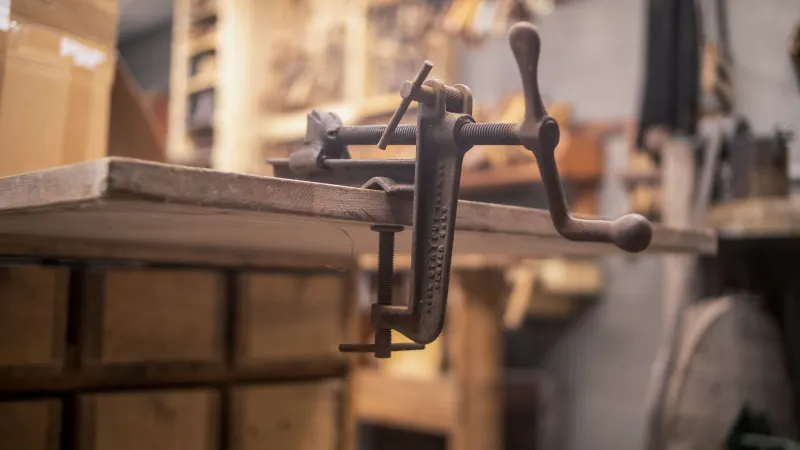
Walk into a certain kind of repair shop in any mid-sized American city right now and you'll find something unexpected on the counter: a hand-lettered sign, a waiting list, and a customer base that looks nothing like what you'd expect from a place that fixes machines most people haven't touched since high school typing class.
The machines are old. The customers are not.
Typewriter repair — a trade that spent about two decades quietly dying — is back. And the reasons why say a lot more about where we are as a culture than any trend piece about vinyl records or film cameras ever could.
Something Broke, and It Wasn't the Platen
The people showing up at these shops aren't all collectors chasing vintage aesthetics. A growing slice of the clientele is made up of folks with very specific concerns about what happens to their words after they write them.
Journalists working sensitive sources. Lawyers drafting documents they'd rather not see end up in a cloud server somewhere. Activists in cities where digital surveillance has become a daily reality. Even a handful of therapists who want their session notes to exist exactly once, on paper, with no metadata attached.
The appeal isn't romantic. It's functional. A typewritten page has no IP address. It doesn't autosave to anything. There's no version history, no sync event, no quiet background process phoning home with information about when you typed what and how long you paused between sentences. The document exists in one place, in one form, and it stays that way until someone physically moves it.
In 2025, that's actually a remarkable thing.
The Repair Counter as Community Board
What's interesting isn't just that people are buying and using typewriters again — it's that the repair shops themselves have become nodes in something larger.
In Philadelphia, a small shop that's been operating out of the same row house since the mid-nineties has started hosting what the owner loosely calls "machine nights" — informal gatherings where customers bring in their typewriters for tune-ups and end up talking for hours. The conversations, by most accounts, tend to drift toward the same territory: privacy, documentation, the question of what it means to put something in writing when writing has become a data event.
Similar things are happening in Portland, Chicago, and parts of Brooklyn. The shops aren't advertising this. They don't have to. The people who need to find them are finding them.
There's a word for this kind of place — a location that serves an official function while quietly hosting an unofficial one. The typewriter shop as social infrastructure is a very old idea wearing very new clothes.
What the Machines Actually Offer
It helps to understand what a typewriter actually is, mechanically, to understand why it's attractive to people with specific privacy concerns.
A manual typewriter is a purely mechanical system. There are no electronics. No firmware. No wireless components that could theoretically be exploited. When you strike a key, a lever hits a ribbon, ink transfers to paper, and that's the entire chain of events. The machine cannot be remotely accessed because there is nothing in it to access. It cannot be compelled to produce logs because it produces no logs.
For people operating in environments where digital hygiene has become a professional necessity — investigative reporters, civil rights lawyers, certain categories of medical professionals — that's not a quirk. That's a feature set.
The tradeoff is obvious: you can't search a typewritten document, can't copy-paste, can't back it up to the cloud. But for a specific class of document, those aren't bugs either. Some things are better off existing in exactly one copy, readable only by whoever holds the paper.
The People Keeping the Trade Alive
Typewriter repair is, technically speaking, a dying art. The number of people who actually know how to service a vintage Olympia or a mid-century Royal is shrinking. Most of the knowledge lives with technicians who learned the trade before the personal computer existed and have been passing it on informally ever since.
What's changed recently is that some younger people are actively seeking out that knowledge. Not as a hobby, exactly — more as a response to something they can feel shifting in the culture.
One repair technician in Austin, who learned the trade from his grandfather and has been running his own shop for about a decade, described the shift this way: the customers who started coming in three or four years ago were different from the collectors he'd always served. They weren't interested in the aesthetics. They wanted to know how long a machine would last, how hard it was to source parts, whether he could teach them basic maintenance so they wouldn't have to depend on anyone else to keep the thing running.
Self-sufficiency. Redundancy. The ability to keep operating when the infrastructure around you goes unreliable or untrustworthy.
Those are not the concerns of a hobbyist.
The Signal in the Mechanism
There's something worth sitting with here, something that goes beyond the practical question of digital footprints and metadata.
The resurgence of typewriters — especially among people who are thoughtful about why they're using them — is a form of communication about communication. It's a statement about what we trust, what we don't, and what we're willing to do differently because of that distrust.
When a journalist types out notes on a 1968 Hermes 3000 instead of a laptop, they're not being precious. They're making a calculated decision about the risk profile of their work. When a legal team drafts certain documents on paper and keeps them in a locked drawer instead of a shared drive, that's not Luddism. That's operational security.
The typewriter repair shop, in this context, becomes something like a low-frequency signal in a noisy spectrum. It's not broadcasting loudly. You have to be listening for it to find it. But once you tune in, it's remarkably clear.
The machines are old. The conversation happening around them is very much of this moment.
And somewhere in a back room in a city near you, a technician is adjusting the tension on a ribbon cartridge while a customer waits, and they're probably talking about something that has nothing to do with typewriters at all.