Before the Algorithm: How Rogue Radio Operators Wrote the Rules for Every Secret Corner of the Internet
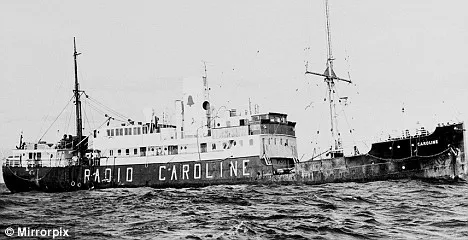
Photo: vintage pirate radio transmitter ship broadcasting ocean, via www.mediacommunicatie.nl
Static Was Never Just Noise
Somewhere around 1965, a guy named Ronan O'Rahilly was broadcasting rock and roll from a ship anchored in the North Sea, just outside British territorial waters. His station — Radio Caroline — couldn't be touched by the BBC or the British government. It existed in a legal gray zone, powered by the fact that the signal didn't care about borders. Millions of people tuned in. The establishment hated it. The listeners loved it precisely because the establishment hated it.
That dynamic — the scrappy signal cutting through institutional noise to reach an audience that actually wanted to hear it — is the same energy powering the most interesting corners of the internet right now. If you've ever been dropped a Discord invite link that expires in 24 hours, found your way into a Telegram channel through three degrees of referral, or stumbled onto a forum that doesn't appear in any Google search result, you've already been living inside the pirate radio tradition. You just didn't have a name for it.
The Frequency Was Always the Point
Pirate radio operators in the US had their own version of this. Throughout the 70s and 80s, unlicensed FM stations were popping up in cities like New York, Chicago, and San Francisco — particularly in Black and Latino communities that were being completely ignored by commercial radio. These weren't hobbyists messing around. They were filling a genuine vacuum, broadcasting salsa, hip-hop, gospel, and community news to neighborhoods that mainstream media had written off.
The FCC would show up, confiscate equipment, issue fines. Operators would rebuild within weeks, sometimes days. The community protected them because the community needed them. Sound familiar? It should. That's exactly the cycle that plays out every time a subreddit gets banned and reappears somewhere else within 48 hours, or when a Twitch streamer gets deplatformed and their audience follows them to Kick or Rumble or some self-hosted server that three hundred people know about and nobody else does.
The mechanism is identical. The medium changed. The impulse didn't.
Encryption Is Just a Better Transmitter
Here's where it gets interesting. Early pirate broadcasters understood that the signal itself was their protection. Broadcast from international waters, keep your transmitter mobile, never stay in one place long enough to get caught. They were practicing a form of operational security that would look completely at home in a 2024 thread about OPSEC on a privacy forum.
End-to-end encryption, onion routing, decentralized hosting — these aren't just technical solutions. They're the philosophical descendants of a ship-based transmitter sitting three miles offshore. The goal is the same: get the signal out without giving anyone the ability to shut it down. The people building these tools are the engineers; the people using them are the listeners. The relationship is the same as it was when Radio Free Europe was trying to punch through Soviet jamming signals.
What's shifted is the scale. A pirate radio station might reach a few hundred thousand people on a good night. A private Telegram channel can reach that in an afternoon, and the content can be anything — political organizing, niche music communities, independent journalism, or just a group of people who want to talk about something without an algorithm deciding whether it's worth amplifying.
The Invite Is the Handshake
One thing that defined pirate radio culture was the sense of discovery. You found these stations by scanning the dial, by word of mouth, by someone telling you to tune to 88.7 at midnight on Fridays. There was no directory. There was no search function. The friction was part of the experience — it meant that the audience you built was genuinely invested.
That same architecture is everywhere in underground internet culture. Private Discord servers don't advertise. Forums that matter rarely rank on the first page of anything. The communities that have the most interesting conversations are often the hardest to find on purpose. The friction filters the audience. It keeps the space from being flooded by people who don't actually care.
This isn't just gatekeeping for its own sake. It's a structural choice that shapes the quality of what gets built inside. When you had to work to find a pirate station, you were already pre-selected as someone who was curious enough to look. The same logic applies to a Discord server with a 48-hour invite link.
What Got Lost in the Translation
It would be dishonest not to mention the parts that didn't survive the migration from analog to digital. Pirate radio was, at its best, deeply local. It was tied to a specific neighborhood, a specific frequency, a specific moment in a specific city. The people making it and the people listening to it often lived within a few miles of each other. There was a geographic accountability that the internet doesn't replicate.
Online underground communities can scale in ways that pirate radio never could — and that scale introduces its own problems. Anonymity that protects a political dissident can also protect someone with genuinely bad intentions. The same decentralized architecture that kept Radio Caroline on the air is what keeps some of the internet's worst spaces alive too. That's not a comfortable thing to sit with, but it's honest.
The pirate radio operators didn't solve that problem either, by the way. Some of those unlicensed stations were running scams. Some were spreading misinformation. The medium was never inherently virtuous — it was just free.
The Signal Keeps Moving
What pirate radio actually gave us is a proof of concept. It demonstrated that communities don't need institutional permission to communicate, that audiences will find signals worth finding, and that the impulse to build something outside the official channels is persistent and basically unkillable. Every time a platform shuts something down, the signal moves. It always has.
The names change. The frequencies change. The technology gets more sophisticated with every cycle. But somewhere right now, someone is broadcasting from just outside the reach of whatever counts as territorial waters in 2024, and a few thousand people who needed to hear exactly that are tuning in.
That's not a bug in the system. That's the whole point of the system.