Dead Language, Live Machine: The Underground Coders Keeping Forgotten Software Breathing
There's a version of the internet that most people never think about — not the dark web, not the deep web, but something older and stranger. It's the layer underneath everything, the sediment of computing history, where programming languages nobody teaches anymore still technically exist, where operating systems that ran entire industries in the 1980s sit in a kind of digital limbo. Not deleted. Not archived in any meaningful sense. Just... stranded.
A scattered, loosely organized community of programmers, historians, and what you might charitably call digital obsessives is doing something about that. They call themselves software preservationists, though most of them would probably wince at any label. What they're doing is closer to archaeology — sifting through the ruins of computing's past and trying to make sure the artifacts still actually work.
The Clock Is Already Running
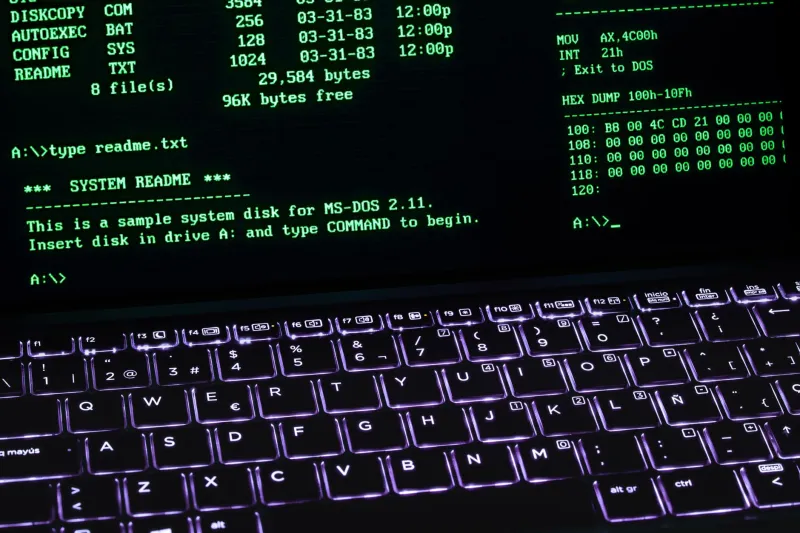
Here's the part that doesn't get talked about enough: software doesn't just become obsolete. It becomes unrunnable. There's a difference. An old book is still a book. An old program that requires hardware configurations that no longer exist, compilers that were never open-sourced, or operating environments that corporate owners have quietly let expire — that program is functionally dead. You can look at the source code, maybe, but you can't execute it. You can't experience what it did.
This matters more than most people realize. Significant chunks of scientific research from the last four decades were produced using software that has since been abandoned. Medical imaging tools. Climate modeling programs. Financial systems that underpinned entire economies. The data those programs generated still exists. The logic that produced it, increasingly, does not.
"People treat software like it's permanent because it's digital," one preservationist wrote in a forum thread that's been circulating in these communities for a while. "It's not. It's more fragile than paper in some ways. Paper doesn't need a specific machine to be readable."
What Preservation Actually Looks Like
The work is less glamorous than the stakes might suggest. A lot of it is documentation — the painstaking process of writing down how software behaved, what its quirks were, what undocumented features existed that never made it into any official manual. This stuff lived in the heads of programmers who have since retired, died, or moved on to jobs at companies that own the intellectual property and have zero interest in releasing it.
Emulation is the other major front. Building software environments that can convincingly mimic obsolete hardware is technically demanding and legally murky — a combination that keeps the work underground almost by necessity. Some of the most capable emulation projects in existence exist in a gray zone, distributed through channels that major platforms won't touch, maintained by people who communicate through mailing lists and IRC channels and forums that feel like they predate the modern web because, in some cases, they literally do.
The Internet Archive does some of this work officially, and deserves credit for it. But the Archive has limits — legal, financial, organizational. It can't do everything, and the preservationist underground has quietly positioned itself to handle what the Archive can't or won't.
The Languages Nobody Teaches Anymore
Some of what's being preserved isn't software in the application sense but something more fundamental: programming languages themselves. COBOL gets occasional mainstream press because it still runs a surprising percentage of American banking infrastructure. But there are dozens of languages below that waterline — SNOBOL, PL/I, Simula, APL in its original form — that shaped how entire generations of programmers thought about problems, and that are now essentially inaccessible to anyone who didn't learn them before a certain point.
The loss isn't just nostalgic. Ideas encoded in those languages — particular ways of thinking about data structures, concurrency, recursion — don't always have clean translations into modern equivalents. When a language dies, something conceptual dies with it. Not every idea survives the migration.
There are people actively working to keep these languages runnable. Writing new compilers. Documenting edge cases. Building communities around languages that have fewer active users than some small-town book clubs. The commitment is, depending on your perspective, either admirable or slightly unhinged. Possibly both.
Who Actually Does This
The demographic is harder to pin down than you'd expect. Some are retired engineers who worked on this software professionally and feel a personal responsibility to it. Some are younger programmers who stumbled into computing history through curiosity and got hooked. Some are academics in computer science departments who work on preservation quietly, without institutional support, because the field doesn't reward this kind of work with grants or tenure.
A lot of them are simply people who believe, at a foundational level, that losing functional access to historical software is a civilizational problem that nobody in charge is taking seriously enough. They're not wrong. No major tech company has a preservation mandate. No federal agency is systematically addressing this. The Library of Congress has some programs, but the scale of what's being lost outpaces any official response.
What holds these communities together is a combination of shared obsession and genuine mutual aid. When someone needs a specific piece of documentation that only exists in a physical manual in a specific university library, someone else in the network usually knows who to contact. When a critical emulation project loses its hosting, the community rallies. It's informal, sometimes chaotic, and more effective than it has any right to be.
The Signal Underneath
There's something PeciaBK-coded about all of this — the idea that the most important transmissions are the ones nobody official is bothering to receive. The preservationist underground is, in a sense, tuning into a frequency that the mainstream tech industry has written off as dead air.
But the signal is still there. The code still exists, waiting for someone with the right tools and enough stubbornness to make it run again. Every piece of software these communities rescue is a small argument against the idea that the past is simply gone once the hardware that ran it has been scrapped.
The question isn't whether this work is worth doing. The question is whether enough people will do it before the window closes. Software has a half-life. Every year that passes without documentation, without emulation, without someone who remembers how a particular system actually behaved — that's a year of entropy the preservationists have to fight twice as hard to recover.
Some of them have been fighting for decades. Most of them expect to keep fighting. The alternative is a version of computing history that exists only as a story people tell about what used to be possible — with no way to verify any of it, and no way to run the proof.