Ink and Instinct: The Americans Hand-Copying the Web Before It Vanishes
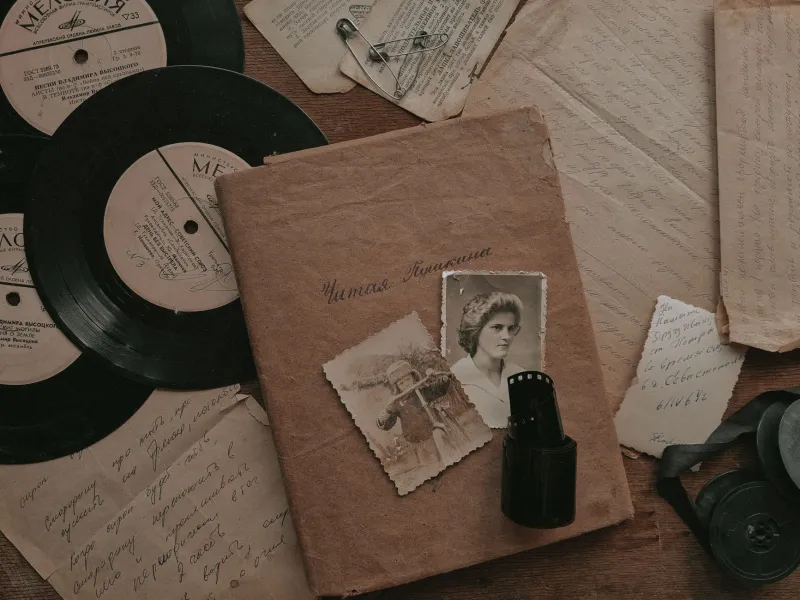
Somewhere in a rented storage unit outside Tucson, there are forty-seven composition notebooks stacked in plastic bins. Each one is filled front to back in blue ballpoint pen — forum posts, comment threads, wiki entries, archived blog posts from the mid-2000s. The person who wrote them asked us not to use their name. They go by Vestibule on the forums where this kind of thing gets discussed. They've been at it for six years.
"I know how it sounds," Vestibule told us over a messaging app they'll delete after this conversation. "But I've watched things disappear. Real things. Things people thought were permanent."
They're not alone. Across the country, a loose and largely uncoordinated movement of individuals has quietly taken up the practice of manual transcription — copying digital content by hand onto paper, into bound journals, or onto physical media like microfilm and archival-grade print. They call themselves different things depending on the community: analog archivists, paper monks, ink witnesses. Whatever the label, the impulse is the same. The internet is forgetting itself, and they want to catch what falls.
The Rot Nobody's Talking About
Link rot is real and it's accelerating. Studies from digital preservation researchers have found that a significant percentage of URLs cited in academic papers no longer resolve within a few years of publication. Entire platforms have gone dark — GeoCities, Vine, Google+, countless smaller forums — taking with them years of user-generated content, community knowledge, and cultural artifacts that existed nowhere else. The Internet Archive does heroic work, but it's one organization with finite resources, and it operates on the assumption that the digital layer itself remains stable.
These transcribers are betting it won't.
"The cloud isn't a place," says a woman in Portland who goes by Cartridge and has been transcribing tech forum posts onto acid-free paper since 2019. "It's a billing agreement. When the billing stops, so does your data." She's currently working through a cache of posts from a now-defunct hardware repair community — the kind of granular, hands-on technical knowledge that she says "lives in no textbook and was never meant to."
What They're Saving (and Why Those Specific Things)
The selection process is where it gets genuinely fascinating. These aren't people printing out Wikipedia articles. The content they choose to preserve tends to be specific, niche, and irreplaceable — the kind of stuff that algorithmic platforms have never had any incentive to surface or protect.
One archivist in Ohio has spent three years transcribing posts from a now-archived chronic illness support forum, capturing firsthand patient experiences and treatment strategies that predate the current medical consensus on several conditions. Another, based in rural Vermont, is working through a personal project to hand-copy the entire run of a defunct political zine from the early 2000s that was only ever published online. A small group in Chicago has organized around preserving the comment sections — not the articles, specifically the comments — from a regional music blog that shuttered in 2015.
"The articles were fine," one of that group's members told us. "But the comments were where the actual knowledge lived. Show dates, venue histories, who played with who, which records got pressed locally. That stuff is gone from every other source."
The specificity is deliberate. Most of these people aren't trying to save everything. They're trying to save the things that have no institutional advocate — the digital flotsam that matters deeply to small communities and exactly nobody else.
The Microfilm Contingent
A subset of the movement has gone further than pen and paper. A handful of practitioners have invested in microfilm equipment — either sourcing vintage readers and cameras or, in a few cases, working with small labs that still offer the service. Microfilm, when stored correctly, has a documented lifespan of several hundred years. It requires no electricity to read, no software to interpret, no proprietary format to decode.
"A piece of paper with ink on it is already pretty resilient," notes one archivist who operates out of a basement in Minneapolis and asked to be identified only as Spool. "Microfilm is just paper that took the commitment more seriously."
Spool has been filming printed transcriptions of select internet content since 2021. The collection currently occupies a small fireproof cabinet. It includes forum threads about urban infrastructure, a series of long-form personal essays from a blog that was deleted by its author, and what Spool describes as "a complete record of a Discord server that got nuked overnight with no warning and no backup."
The Discord situation is one that comes up repeatedly in these conversations. Platform-native communities — Discord servers, Slack workspaces, subreddits — exist entirely at the discretion of the platform or the administrator. They can vanish without notice, and when they do, there is often no external record that they existed at all.
Distrust as a Design Philosophy
It would be easy to frame all of this as paranoia, and some of these individuals would probably accept that label without much argument. But the distrust driving this movement isn't entirely abstract. It's grounded in documented events: platform shutdowns, corporate acquisitions that resulted in data deletion, terms-of-service changes that retroactively altered what users owned, algorithmic decisions that made content effectively invisible without technically removing it.
"Erasure doesn't have to be dramatic," Cartridge says. "It can just be a quiet decision made in a boardroom that nobody outside the company ever hears about."
There's also something in here that's less about distrust and more about a specific kind of attention. Transcribing something by hand is slow. It forces you to read carefully, to sit with the material, to notice things you'd scroll past. Several people we spoke to described the practice as meditative — a way of making the ephemeral feel real by literally running it through your body.
"When I write something out," Vestibule said, "I actually know it. Not just that it exists. I know what it says."
The Archive That Doesn't Have a Website
There's a certain irony in the fact that most of these communities coordinate online — through forums, encrypted chats, small Discord servers of their own. They share recommendations for archival paper, compare notes on handwriting fatigue, debate which content is worth the effort. Some have started exchanging physical copies through the mail, building distributed collections that no single point of failure can take down.
None of them have a website. None of them want one.
The Wayback Machine is useful, they'll tell you. But it's still a server somewhere. It still runs on someone's infrastructure. It still requires the continued existence of an organization with funding and a mission that could change.
A notebook in a storage unit in Tucson requires none of that. It just requires someone who thought something was worth keeping — and had the patience to write it down.