Something's Broadcasting That Shouldn't Be: Inside the Hunt for Frequencies That Officially Don't Exist
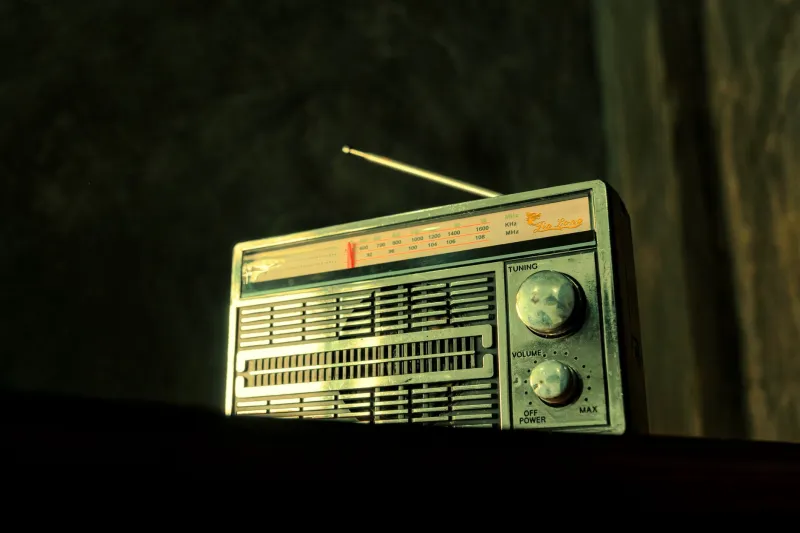
Somewhere in the middle of a Tuesday night, a retired electrician in rural Ohio is hunched over a receiver the size of a small refrigerator, scribbling numbers into a spiral notebook he's kept since 2009. He's not a conspiracy theorist. He's not especially eccentric. He just heard something once that he couldn't explain, and now he can't stop listening.
He asked us not to use his name. He's been doing this long enough to know that the moment you put your name on something like this, the conversation shifts away from the data.
"It's not about aliens," he told us over the phone, slightly exasperated. "It's about the fact that something is transmitting on a frequency that, according to every public record I can find, is completely unallocated. That's just a fact. I'd love for someone to explain it."
No one has.
The Registry Problem
The FCC maintains a public database of frequency allocations in the United States — who's broadcasting where, on what band, and for what purpose. It's not a perfect document, but it's extensive. International equivalents exist through the ITU. Between the two, most of the usable radio spectrum is accounted for, at least on paper.
Except it isn't.
Shortwave listeners — a community that's older than the internet and arguably more stubborn — have been documenting transmissions that fall into gaps in those registries for decades. Some are easy to explain: equipment interference, intermodulation artifacts, atmospheric bounce effects that carry distant licensed signals into unexpected frequency ranges. Radio is a physical phenomenon, and physical phenomena don't always respect bureaucratic charts.
But some aren't so easy to explain. And the people who've been tracking them seriously aren't the type to leap to dramatic conclusions.
"The first thing you learn in this hobby is that your equipment lies to you constantly," says a woman who goes by the handle Meridian_77 on several shortwave forums. She's been logging anomalies since the mid-1990s and maintains a personal archive of recordings she's never been able to source. "You have to rule out every possible technical explanation before you can even start to say something is genuinely strange. Most of us spend 90% of our time doing exactly that."
What's left after that process is a smaller set of signals that a growing number of listeners are comparing notes on — and finding, with some unease, that they're hearing the same things.
The Signals Themselves
Descriptions vary, but certain patterns keep surfacing in community discussions. There are tonal bursts — short, repeating sequences of pitched tones that don't match any known beacon format. There are what some listeners call "carriers without content," meaning a frequency is clearly occupied and transmitting power, but carries no decodable information. And then there are the stranger ones: signals that appear to shift slightly in frequency over time, as though something is slowly scanning, or drifting.
One subset of the community has become particularly focused on a cluster of transmissions in the 11–15 MHz range that seem to appear and disappear on irregular schedules. A loose online group calling themselves the Null Registry Project has been cross-referencing independent logs from listeners in at least a dozen states, attempting to triangulate origin points and establish whether the signals are consistent across geography.
"If three people in different states are logging the same anomaly at the same time on the same frequency, you've at least established that it's real," one of the project's organizers explained in a forum post that's been shared widely in shortwave circles. "What it is — that's the part we're still working on."
The project has so far produced a document of roughly 40 pages, cross-referencing timestamped logs and spectral screenshots. It's not a manifesto. It's more like an unusually obsessive spreadsheet with audio attachments.
The Classified Explanation (and Why It's Unsatisfying)
The most reasonable explanation that serious listeners tend to land on is also the least satisfying: government or military use. The US military operates on frequencies that are not publicly disclosed. So does a significant portion of federal law enforcement and intelligence infrastructure. The FCC's public registry simply doesn't include those allocations.
This is not a secret. It's publicly acknowledged that classified spectrum use exists. And it would account for a substantial portion of what listeners are cataloging.
But it doesn't account for all of it, or at least that's what the more meticulous trackers argue. Military and intelligence transmissions, even when content is encrypted, tend to follow recognizable structural patterns — burst formats, spread-spectrum signatures, timing behaviors that experienced listeners can identify even without decoding the underlying data. Some of what's being documented doesn't match any of those patterns.
"I've been listening to numbers stations since the Cold War," says a man in his late 60s who monitors out of a converted garage in central Virginia. "I know what a government transmission behaves like. Some of this stuff doesn't behave like anything I've heard before. It's not necessarily sinister. But it's not nothing either."
The Community That Won't Let It Go
What's interesting about this corner of the shortwave world isn't the mystery itself — radio has always had mysteries. What's interesting is the methodology that's developed around chasing it.
The people doing this work are, by and large, not the fringe. They're engineers, hobbyists with decades of experience, former military communications personnel who got interested in what they heard during their service. They're building shared databases, developing standardized logging formats, and arguing in painstaking detail about signal processing techniques. It looks less like a conspiracy forum and more like a low-budget research collective.
Meridian_77 put it this way: "The internet gave us the ability to compare notes across distance in real time. Before that, you'd hear something weird and just wonder about it alone. Now you can find out if someone in Arizona heard the same thing at the same time. That changes what's possible."
There's something quietly compelling about that — a group of people using old technology to chase something the new infrastructure can't see, building their own registry of what the official one leaves out. Whether the signals they're tracking turn out to be mundane or genuinely anomalous almost feels secondary to the act of paying attention in the first place.
Something is out there broadcasting. Whether it's supposed to be or not, someone's writing it down.
The notebook in Ohio has about forty pages left.