Knock Twice, Then Wait: The Americans Going Analog to Disappear from the Digital Record
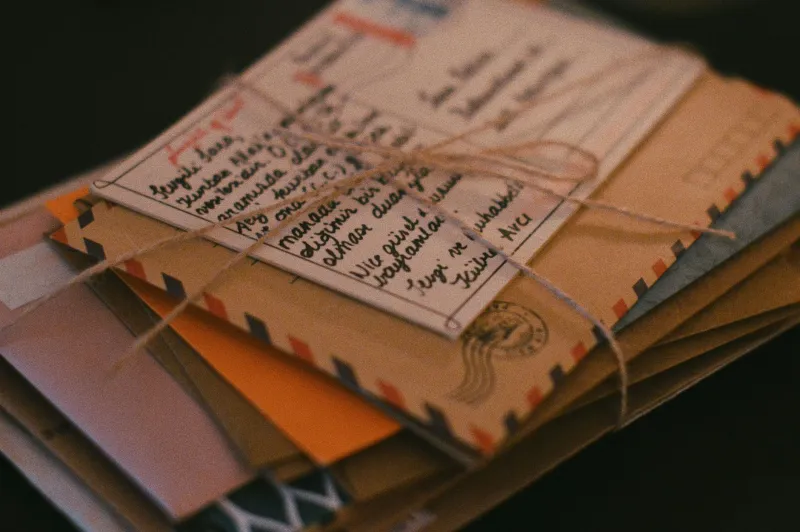
The note arrives in a standard envelope, no return address, postmarked from a city three states away. Inside is a single index card with a short paragraph that reads like a grocery list but isn't. The recipient sets it on their desk, reads it twice, then burns it over their kitchen sink. They've been doing this for two years. They find it clarifying.
This isn't a spy novel. This is a Tuesday in suburban Ohio.
The Feeling That Someone's Always Listening
It's worth acknowledging upfront that the people who've adopted pre-digital communication methods occupy a wide spectrum of motivation. On one end, there are privacy advocates with carefully reasoned positions on data collection, corporate surveillance, and the legal boundaries of what can be subpoenaed. On the other end, there are people who just have a vague, persistent feeling that their phone is paying too much attention and they want to try something different.
Both groups are growing.
A woman in the Pacific Northwest who agreed to talk under the name Vera has been using a window-signal system with her neighbor for about eighteen months. The system is simple: a specific arrangement of objects on a windowsill communicates basic status information — available, busy, need to talk, all good. They developed it after what she describes as "a weird few months" during which she became increasingly uncomfortable with the idea that every communication she had was logged somewhere.
"It started as kind of a joke," Vera says. "Like, what if we just did it the old way? But then we kept doing it and it started to feel really good. There's nothing to screenshot. There's nothing to forward. It just exists between us."
The History They're Borrowing From
None of these methods are new. That's part of the point.
Window signaling has roots in everything from Underground Railroad communication systems to World War II resistance networks. Knocking patterns were standard practice in labor organizing movements of the early twentieth century, when organizers had genuine reason to fear surveillance from company agents and government informants. Mail-based cipher exchanges go back centuries and enjoyed a minor renaissance among Cold War hobbyists.
What's interesting about the current revival is that practitioners are often quite conscious of this history. They're not reinventing anything. They're deliberately reaching back to methods that were developed under conditions of real surveillance pressure and finding them newly relevant.
"These techniques weren't invented because people were paranoid," says Marcus, a history teacher in the Midwest who has been incorporating analog communication methods into what he calls his "personal practice" for about three years. "They were invented because the surveillance was real. And now people are looking around and going, okay, maybe the surveillance is real again."
What the Methods Actually Look Like
The range of techniques in use is broader than you might expect. Beyond window signals and knocking patterns, practitioners describe using:
Physical dead drops — leaving notes or small objects at prearranged locations for another person to retrieve. This one has gotten some mainstream attention, but the community of people doing it for genuine privacy reasons rather than novelty is distinct from the geocaching-adjacent hobbyist crowd.
Mail-based cipher exchanges — letters that use simple substitution or transposition ciphers, shared codebooks, or steganographic techniques (hiding messages inside apparently normal text). The postal system, for all its faults, doesn't currently log the content of physical mail in the way digital communication is logged.
Schedule-based communication — agreeing in advance that the presence or absence of a person at a particular place at a particular time constitutes a message. No signal is sent; the signal is the behavior itself.
Object-based signaling — variations on the window system Vera described, using physical objects whose arrangement carries meaning only to people who know the code.
None of these are foolproof. A determined surveillance operation can photograph your windowsill, steam open your letters, and document your movements. But that level of targeted attention requires resources and justification that mass digital surveillance doesn't. The analog methods aren't invisible — they're just expensive to monitor at scale.
The Psychology of Going Invisible
Several practitioners used the same word when describing why they'd adopted these methods: subversive. Not in the sense of doing something illegal — none of what they're describing is remotely illegal — but in the sense of opting out of a system that expects and requires their participation.
"Every time I send a text, I'm generating data for someone," says a software developer in Austin who asked to be called Ren. "Every email, every app notification, every search query. There's this whole economy built on my communication patterns. When I write a letter and mail it, I'm just... not participating in that. It feels like a small act of refusal."
This framing — analog communication as refusal — comes up repeatedly. It positions the low-tech methods not as inferior substitutes for digital communication but as deliberate choices with their own meaning. The medium, in this reading, is very much the message.
There's also something to be said for the psychological texture of these methods. Physical letters take time to write and time to arrive. Window signals require you to actually look at your neighbor's house. Knocking patterns require you to be present. These aren't just privacy tools — they're attention tools, forcing a kind of deliberateness that digital communication has largely eliminated.
"I write better letters than I write texts," Vera says. "Because I know the letter is going to sit there and be read. It matters more. The slowness is the point."
The Limits of Going Analog
Nobody who practices these methods is under the illusion that they've disappeared entirely. They still have phones, still use email, still exist in the digital infrastructure that surrounds everyone in contemporary American life. The analog communication is supplemental — a specific channel reserved for specific relationships and specific kinds of information.
What they've built is something more like a room inside their lives that doesn't have any windows facing the internet. Small, deliberately limited, and entirely theirs.