Your Old Gadgets Are Still Talking. You Just Can't Hear Them.

Somewhere in a Goodwill bin in suburban Ohio, there's a four-year-old Android phone that knows the name of your therapist. It knows the Wi-Fi password for your ex's apartment. It knows the rough coordinates of where you were on a Tuesday night in March of 2021. You donated it. You factory reset it. You moved on. The phone, technically, did not.
This is the part nobody really wants to sit with. We've all absorbed the vague cultural message that deleting something makes it gone, that a factory reset is a kind of digital baptism. But there's a whole other conversation happening underneath that assumption—one that a scattered, loosely connected group of researchers, hobbyist forensics people, and outright obsessives have been trying to surface for years. They call what they're doing data archaeology. What they're digging up is a graveyard.
The Signal Doesn't Stop When You Think It Does
Here's the technical reality that most people never encounter: consumer electronics don't just store data in the obvious places. Your smartphone's flash memory, for instance, uses something called wear-leveling—a process that deliberately spreads writes across the chip to extend its lifespan. The side effect is that data gets scattered across physical sectors in ways that standard deletion commands don't fully address. A factory reset tells the operating system to stop looking at certain sectors. It doesn't necessarily overwrite them.
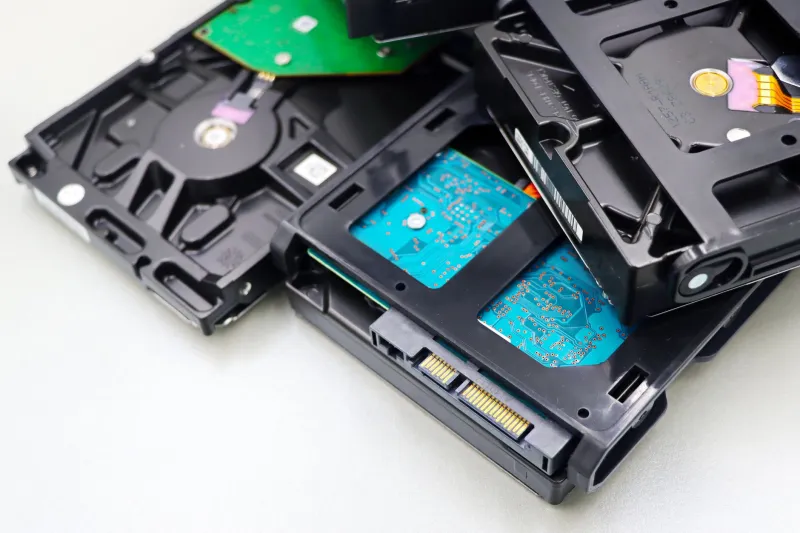
Hard drives have their own version of this problem. Magnetic platters hold residual imprints of previously written data even after overwriting—a phenomenon researchers have been documenting since the 1990s under the term "magnetic remanence." The degree to which this is exploitable has been debated, but the community of people actively testing it has never fully gone away.
And then there's the electromagnetic angle, which is where things get genuinely strange. Every powered device radiates electromagnetic emissions as a byproduct of its operation—signals that, under the right conditions, can carry information about what the device is processing. This isn't fringe speculation; it's the basis of a whole class of side-channel attacks that security researchers have been studying under the umbrella of TEMPEST, a classified NSA program that dates back to the Cold War. The consumer version of this vulnerability is messier and harder to exploit, but it exists.
The People Actually Digging Through the Graveyard
What's interesting is who's paying attention to this. It's not primarily corporate security teams or government agencies, though they have their own operations running. It's a much weirder crowd: retired military guys with RF equipment in their garages, former IT professionals who went off-grid after getting burned by a data breach, college students running forensics experiments on thrift-store laptops.
One loosely affiliated group operating out of forums that most people have never heard of has been systematically purchasing discarded electronics from donation centers across the Midwest and running them through a battery of forensic tests. Their goal, as they've articulated it in various posts, is documentation—they want a public record of exactly how bad the residual data problem is before device manufacturers close the gaps in ways that also close off the research.
The concern there is real. As manufacturers move toward more aggressive encryption at the hardware level—which is genuinely good for security—the forensic window that allows researchers to study these vulnerabilities also narrows. It becomes harder to demonstrate the problem exists. Harder to make the case to ordinary people that their donation-bin phone is a liability.
What's Actually on the Device You Threw Away
Let's be specific about what "residual data" actually means in practice, because the abstract version doesn't quite land.
On a typical smartphone that's been factory reset without additional secure erase tools, forensic software can often recover: call logs, SMS threads, email fragments, cached location data, app usage histories, stored credentials, photos (including ones you thought you deleted years before the reset), and contact information. The recovery rate varies enormously based on device age, manufacturer, and how the device was used after the reset. But the baseline finding from multiple independent studies is that full recovery of meaningful personal data from factory-reset consumer devices is not rare. It's common.
For older mechanical hard drives, the situation is arguably worse. The standard Department of Defense recommendation for secure erasure has historically involved multiple overwrite passes—something no consumer ever does, because most consumers don't know it's necessary.
The Manufacturers Aren't Exactly Rushing to Tell You
Here's where the editorial angle gets uncomfortable. The companies making these devices have every incentive to market the simplicity of their privacy controls. "Factory reset" sounds complete. "Erase all content and settings" sounds thorough. The language is designed to create confidence, not necessarily to accurately describe what's happening at the hardware level.
This isn't unique to tech. It's how consumer products have always worked. But the stakes feel different when the product is a device that's been in your pocket for three years, logging your location, your communications, your health data, your financial behavior.
The data archaeology community's frustration—and it does read as genuine frustration in the forums and threads where they congregate—is that this information isn't secret. The research exists. The vulnerability documentation exists. It just doesn't reach the people who need it, which is basically everyone who has ever sold, donated, or thrown away an old device.
What You Can Actually Do
The practical advice is less satisfying than the problem deserves, but it exists. For smartphones, the combination of a factory reset after enabling full-device encryption gives you meaningfully better protection—the residual data is encrypted, which dramatically reduces its usefulness to anyone who recovers it. For hard drives, dedicated secure-erase software (DBAN is the most widely recommended free option for older drives) is the standard recommendation. For devices with solid-state storage, manufacturer-specific secure erase tools exist but require actually finding and using them.
For the truly paranoid—and the data archaeology community skews that direction—physical destruction is the only guarantee. A hard drive platter that's been degaussed and then physically shredded is not a privacy liability. A phone screen that's been cracked and tossed in a donation bin is a different story.
The signal, as it turns out, doesn't care about your intentions. It just keeps broadcasting, into whatever static it can find, waiting for someone with the right equipment to tune in.