Buy the Glitch: Inside the Shadow Markets Where Broken Data Has a Price Tag
Something Went Wrong. Someone Paid for It.
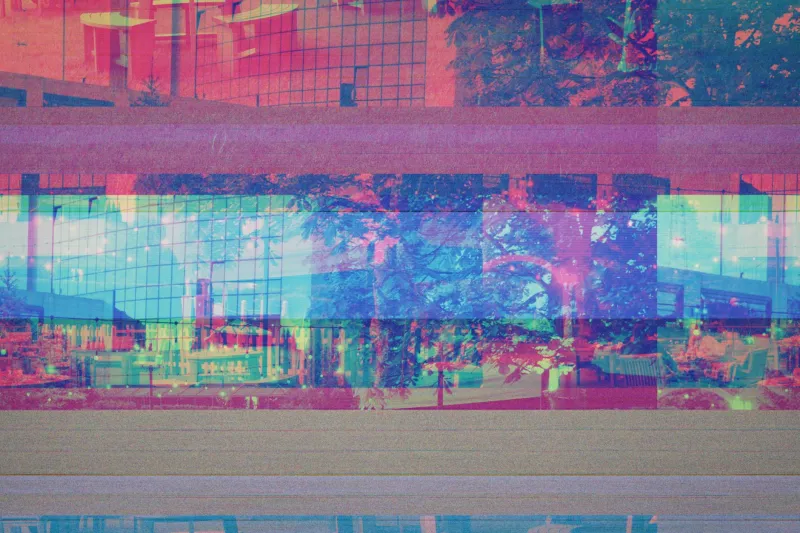
The file opens and immediately misbehaves. Colors bleed sideways across what might have been a portrait. Geometry collapses. A face flickers in the compression noise and then vanishes into a wall of corrupted pixels. Whatever this was supposed to be, it isn't that anymore.
It sold for more than the original would have.
Welcome to the glitch market — a loosely organized, deliberately hard-to-find corner of the digital economy where broken files, corrupted media, and algorithmically destroyed data are the product. Not a mistake, not a loss, not something to be recovered. A commodity. An artifact. In some cases, a significant one.
How Broken Became a Category
To understand how this market exists, you have to understand how the broader digital culture shifted its relationship with perfection. For most of the internet's commercial history, clean was the goal. High resolution, lossless audio, seamless rendering. The entire infrastructure of digital media — compression standards, storage formats, streaming protocols — was engineered to eliminate the artifacts that earlier technology produced.
But elimination has a side effect: it makes the eliminated thing rare. And rare things, in markets, tend to acquire value.
The glitch aesthetic has existed in art and music for decades — databending, circuit bending, the intentional destruction of media as a creative act has a documented lineage running back through noise music, early net art, and the demoscene. What's newer is the formalization of exchange around these objects. The shift from 'interesting broken thing I made' to 'interesting broken thing I made and you can buy.'
The community driving this isn't unified under any particular banner. It's a mix of digital artists, collectors, privacy-oriented tech people, and a contingent that's harder to categorize — people who've decided that a corrupted JPEG carries more honesty than a polished one, and are willing to pay for that honesty.
What's Actually Being Traded
The inventory in these markets is genuinely varied. Corrupted image files are the most accessible entry point — a photograph or render that's been damaged through intentional bit manipulation, failed format conversion, or extreme compression until the original content becomes something else. Some are barely recognizable. Some retain just enough of their source material to be haunting.
Audio is another active category. Tracks that degraded through lossy re-encoding cycles, recordings that hit hardware limits in interesting ways, synthesizer patches that produced sounds they weren't designed to produce and couldn't be reliably reproduced. The irreproducibility is part of the value proposition — a glitched audio artifact that exists in one state and can't be recreated is functionally unique in a way that a clean digital file never is.
Video artifacts command higher prices. Failed renders, codec errors that produced visual noise in patterned ways, footage that encountered some problem in post-production and came out the other side transformed. These are rarer partly because the file sizes involved make corruption more consequential — a bad video is more visibly, dramatically bad than a bad image, and the ones that fail in genuinely interesting ways are harder to find.
There's also a category of what some traders call 'process artifacts' — outputs from AI image generators, algorithmic composition tools, or automated editing systems that encountered edge cases and produced something the system wasn't supposed to produce. These exist in a legally ambiguous space that seems to add to rather than diminish their appeal.
Where the Trades Happen
The markets themselves are deliberately low-profile. Some operate through Discord servers with invite-only access. Others run through encrypted forums that require referrals to join. There's a secondary layer of activity on certain blockchain-based platforms, where the provenance and scarcity of a corrupted file can be technically verified — though the community's relationship with NFT infrastructure is complicated, and plenty of traders avoid it on principle.
Pricing is informal and often negotiated. Rarity matters, but so does the quality of the corruption — whether it produced something visually or sonically interesting, whether the damage has a kind of internal logic, whether the artifact tells a story about what happened to it. Provenance is valued when it can be established: a file that corrupted during a specific notable event, or that was produced by a specific tool or process, carries additional context.
Some traders operate more like curators than merchants. They collect, sit on things, occasionally sell or trade, and are as interested in the cultural conversation around their inventory as in any transaction. For these people, the market is secondary to the argument the market is making.
The Argument the Market Is Making
And there is an argument. Spend enough time in these communities and it surfaces pretty clearly: the obsession with flawless digital experience is itself a kind of damage. The smoothing-out of every artifact, the algorithmic optimization of every image, the compression of every piece of media into the most efficiently deliverable version of itself — these processes don't just remove noise, they remove evidence of process. They remove the mark of time and handling and accident that makes physical objects feel real.
A corrupted file, in this reading, has been somewhere. It has a history that's written into its structure. The damage is documentation.
There's also a harder-edged version of the argument that's more explicitly political. Data perfection serves platforms. Clean, consistent, predictable files are easier to store, easier to monetize, easier to surveil and categorize. A file that's broken in interesting ways is harder to process, harder to index, harder to extract clean signal from. Some traders in these markets describe their activity in terms that are explicitly resistant — buying and circulating broken data as a small act of friction against systems that run on smooth.
A Market That Doesn't Want to Scale
What keeps this economy genuinely underground is partly practical and partly ideological. The community doesn't want mainstream attention. Growth would change the dynamics, attract the wrong participants, and potentially invite the kind of platform-mediated commercialization that the whole project is positioned against.
There's something fitting about that. A market in broken things that would break if it got too fixed. The glitch as both product and operating principle.
The static isn't interference. It's the signal.