Nobody’s Calling: The Quiet Market for Phone Numbers That No Longer Ring
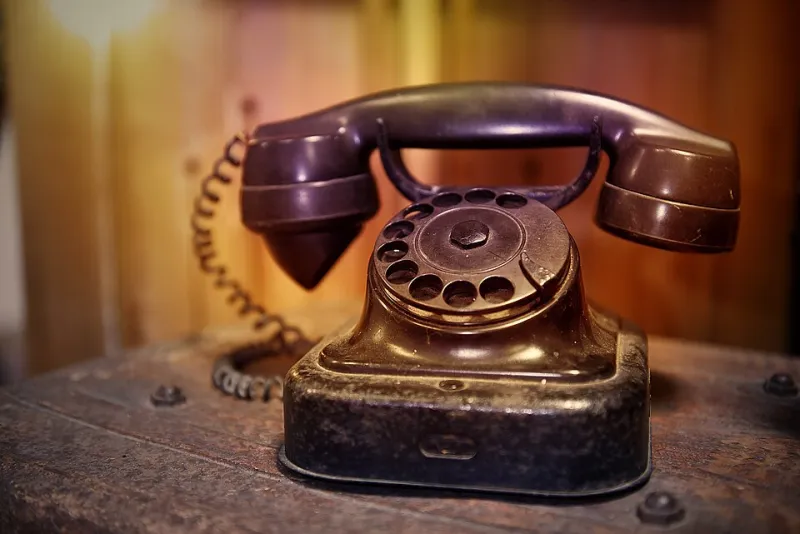
Photo: Hari mei harso, CC BY-SA 4.0, via Wikimedia Commons
In a diner outside Cleveland, a man in a work jacket slides a phone across the table. It is an old flip phone, charged, with a number he has kept active for nine years. The number belonged to his father’s body shop. The shop closed in 2017. The building is a vape store now. The number still rings—sometimes—and when it does, it is usually a wrong number, a robocall, or someone asking for a tow that will never come.
He pays $12 a month to keep it alive. He is not alone.
Across the US, there is a quiet, unofficial market for phone numbers that belong to nowhere: disconnected lines tied to closed businesses, vanished towns, family homes that were sold, area codes that carry a reputation. Some people collect them. Some trade them. Some pay carriers and brokers to keep them parked. The trade is part folklore, part logistics, and part identity crisis. It asks a question that sounds silly until it doesn’t: how much of you is a ten-digit string?
The number as relic
The North American Numbering Plan is an administrative grid, not a sentimental one. Numbers are assigned to carriers, not owned by people. When a line is disconnected, the number can go back into a pool and be reassigned. Number portability lets you move a number between carriers, but it does not make the number your property. The FCC has rules about keeping your number when you switch, but no rule says a number must stay dead forever.
That has not stopped people from treating certain numbers as heirlooms. A family number from a house that was sold in 2004. A business line from a bar that closed after a fire. A prefix from a small town that was absorbed by a larger area code. The numbers are not useful in the usual sense. They are markers.
“It’s a coordinate,” says a number broker who works mostly with small businesses. “It tells you where something was.”
The gray market
The market for dead numbers is not a single marketplace. It is a scatter of forums, Facebook groups, prepaid SIM cards, VoIP accounts, and brokers who specialize in vanity numbers. Some trade in toll-free numbers, which have a more formal resale market. Some trade in local numbers tied to memorable patterns—repeating digits, old exchange names, area codes that have become cultural shorthand.
The legal ground is soft. You cannot really sell a phone number the way you sell a domain name. What you can sell is a service: number parking, porting assistance, a business’s goodwill, a vanity number lease. Carriers can reclaim numbers after inactivity. VoIP providers can change terms. A number that rings today can be gone tomorrow.
That uncertainty is part of the appeal. A dead number is a small, cheap piece of infrastructure that feels like a secret. It is also a reminder that the phone system is older and stranger than the apps that sit on top of it.
Why keep a dead line?
The reasons are practical and emotional, often at once. A small business keeps its old number because the sign is still on the building and customers still call. A family keeps a parent’s number because it is tied to bank alerts and two-factor codes. A collector keeps a number because it is from a town that no longer has its own exchange. A scammer keeps a number because it looks local.
The two-factor angle is the most modern. A phone number is still a key to email, banking, social media, and medical portals. When someone dies or moves, the number can become a liability. Keeping it active can be a way to preserve access—or a way to prevent someone else from getting it.
Then there is the folklore. Area codes carry stereotypes and loyalties. A 212 number sounds like Manhattan. A 305 number sounds like Miami. A 313 number sounds like Detroit. A number from a small town can sound like a place that only exists in memory. People collect these prefixes the way others collect postcards.
Who profits?
The money is not enormous, but it is real. Carriers collect monthly fees for lines that do almost nothing. Brokers charge for number searches, porting help, and “number preservation” services. Vanity number companies lease memorable digits to businesses. Scammers buy access to numbers that look local and then burn them.
The losers are often the people who thought a number was permanent. A disconnected line can be reassigned quickly. A family that forgets to port a number may lose it. A business that closes without forwarding its line may find that its old number now belongs to a competitor—or a debt collector.
What the dial tone remembers
The man in the Cleveland diner does not have a grand theory about the numbering plan. He just likes hearing the old ring. Sometimes, he says, he calls the number from his cell phone just to see it light up. Nobody answers. The voicemail greeting is still his father’s voice, rough and impatient: “You know what to do.”
He knows the number is not his father. He knows it is not even really his. But it is a signal from a place that used to exist, and in 2026 that is worth $12 a month.
At PeciaBK, we spend a lot of time on the static between what is gone and what is still transmitting. Dead numbers are part of that static. They do not ring for anyone. They ring for everyone who remembers.