Voices from Nowhere: The Unexplained Radio Transmissions That Have Been Running for Decades
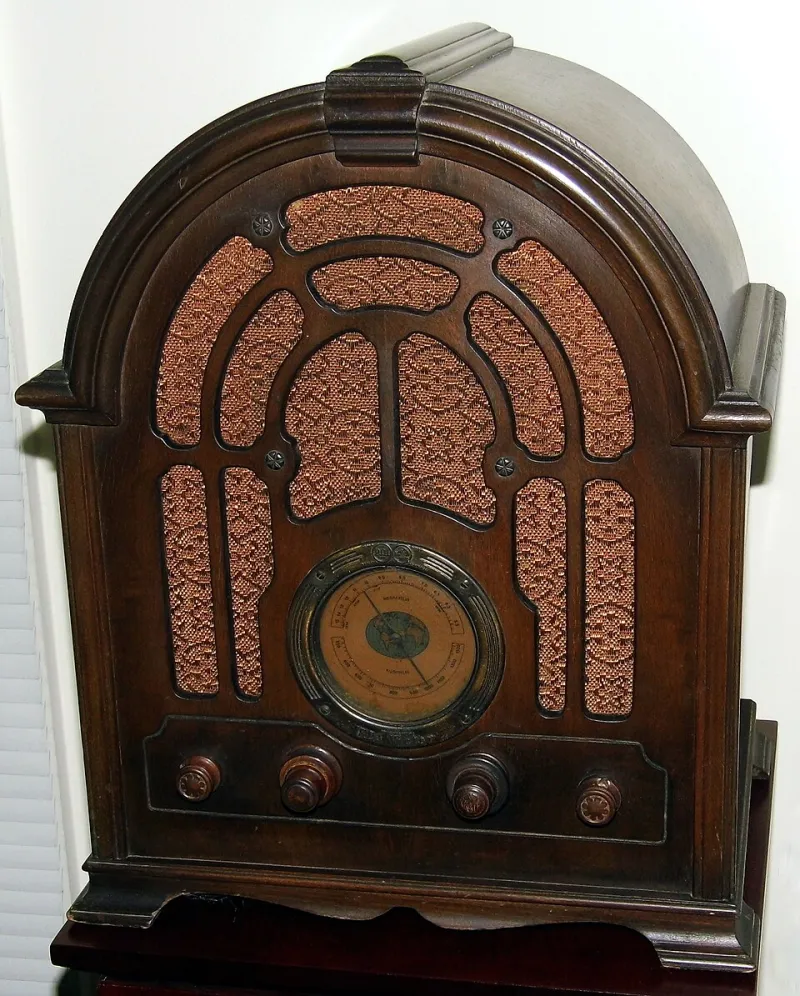
Photo: Joe Haupt from USA, CC BY-SA 2.0, via Wikimedia Commons
Turn the Dial Past the Music
Most people who own a shortwave radio use it to catch distant AM stations, maybe international news feeds, the occasional ham operator chatting with someone three states away. But if you know where to tune — and when — you'll find something else entirely. A voice reading strings of numbers. A melody repeating on a loop, the same eight bars cycling without explanation. A burst of digital noise that sounds like a modem having a breakdown, then silence.
These are numbers stations, and they are one of the most persistent unsolved puzzles in the history of radio communication. They've been documented since at least the First World War. They operate across dozens of frequencies. They follow schedules. They use identifiable formats. And the governments and agencies most credibly connected to them have never — officially — confirmed they exist.
For a specific and deeply serious community of hobbyists, researchers, and amateur signals investigators, that silence is the most interesting thing about them.
The Lincolnshire Poacher and Its Cousins
If you want a starting point, the Lincolnshire Poacher is the classic case. Named for the English folk tune it used as an interval signal — those repeating bars that played before each transmission — it broadcast on shortwave frequencies for roughly three decades before going quiet around 2008. Researchers broadly attributed it to British intelligence operating out of Cyprus, though no official acknowledgment ever came.
The format was consistent: the tune, then a series of five-digit number groups read by a synthesized female voice, then the tune again. The numbers were almost certainly one-time pad cipher groups — a form of encryption that, when used correctly, is mathematically unbreakable. The intended recipients would have a matching pad and could decode the message. Everyone else just heard numbers.
The Lincolnshire Poacher wasn't alone. The Conet Project, a landmark 1997 recording compilation released by Irdial-Discs, documented dozens of similar stations from around the world. The Cuban Spy Numbers Station — known as HM01 — was directly tied to espionage prosecutions in the United States when federal investigators found one-time pad materials in the home of a Cuban intelligence asset in Florida. That case is one of the rare instances where the operational purpose of a numbers station became part of the public record.
But most of them have no such paper trail. They just transmit.
The Community That Listens
PRIYOM is probably the most organized civilian effort to track active numbers stations. A volunteer-run project with contributors across multiple continents, it maintains schedules, frequency logs, and audio recordings of transmissions that are still running today. Their database is meticulous in the way that only something built by people who genuinely care about a thing — not people who are paid to care about it — can be.
The broader shortwave listening community, sometimes called SWLs, has forums, mailing lists, and Discord servers where members coordinate real-time monitoring. When a new transmission appears on an unexpected frequency, or when a known station deviates from its schedule, the network responds quickly. Within hours, multiple independent listeners will have logged the event from different geographic locations, cross-referencing to rule out local interference.
What drives this? Ask around and you get variations on the same answer: it's the combination of technical puzzle and genuine mystery. These signals are real. They're not creepypasta, not a game, not an ARG with a solution waiting to be found. They represent actual organized communication happening in the open, using infrastructure that's been running longer than the internet, and the people responsible for them have successfully maintained operational silence for decades.
That's a remarkable thing to sit with.
Modern Transmissions and New Puzzles
Numbers stations didn't die with the Cold War. Researchers have documented active transmissions in the 2020s, and the formats have evolved. Some stations now use digital burst transmission — compressed data packets that last only seconds, requiring specialized software to even detect. Others have shifted to USB (upper sideband) frequencies less commonly monitored by casual listeners.
There are also stranger cases that resist easy categorization. The Buzzer — officially designated UVB-76 but known by its nickname for obvious reasons — is a Russian shortwave station that has broadcast a repeating buzzing tone, almost continuously, since at least 1982. Occasionally, the buzzing stops and a voice reads names and numbers. The purpose is debated: theories range from a military communication channel to a "dead man's switch" type system designed to trigger something if it ever goes silent.
The Buzzer has a livestream. People watch it. Or listen to it, technically. There are communities dedicated to monitoring it around the clock, waiting for the next voice interruption, logging every deviation. It is, in a very specific way, one of the most-followed broadcasts in the world that nobody in mainstream media covers.
What the Silence Means
The refusal of governments to officially acknowledge numbers stations isn't really a secret — it's a convention. Acknowledging them would require acknowledging the networks they support, the methods they use, and the operations they enable. The silence is functional. And in a perverse way, the hobbyist community that monitors these signals is working within the same system: they can observe, document, and theorize, but they can't crack the encryption, and they can't compel anyone to answer questions.
What they can do is bear witness. They can maintain records that official archives won't. They can preserve audio of transmissions that nobody claims, from frequencies nobody admits to using, sent to recipients nobody names.
There's something almost archival about the whole enterprise — a civilian effort to document the edges of a world that prefers to stay undocumented. The signals keep coming. The listeners keep tuning in. And somewhere out there, someone is writing down numbers and waiting for a response that will never be public.